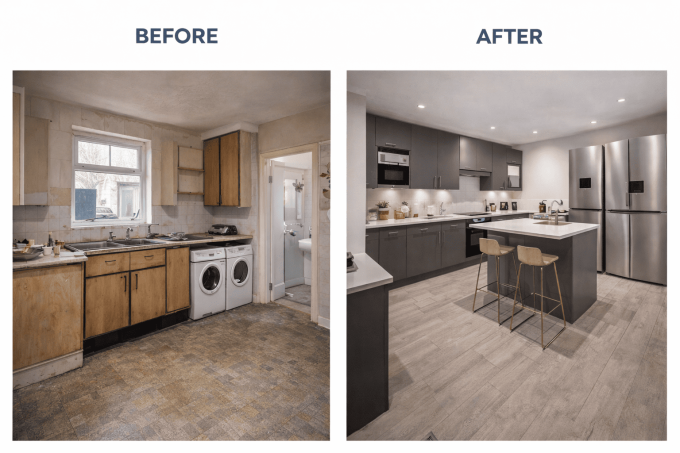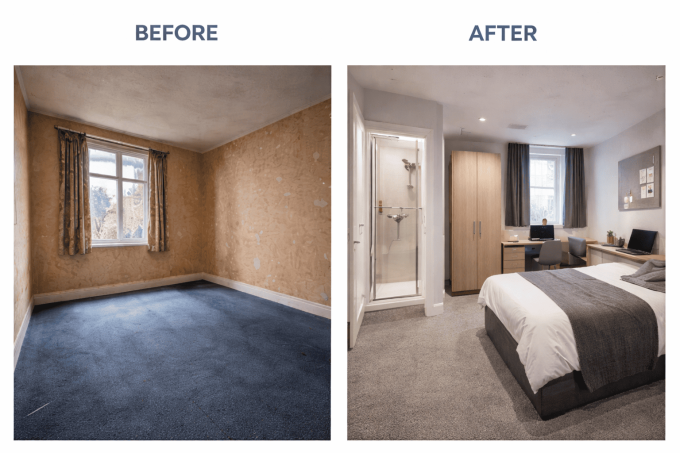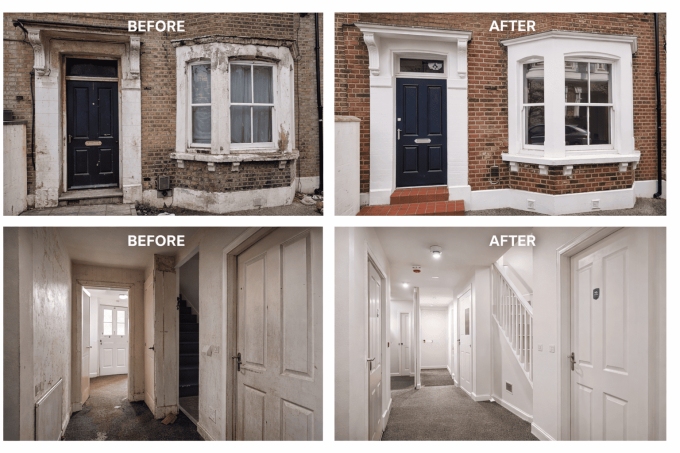
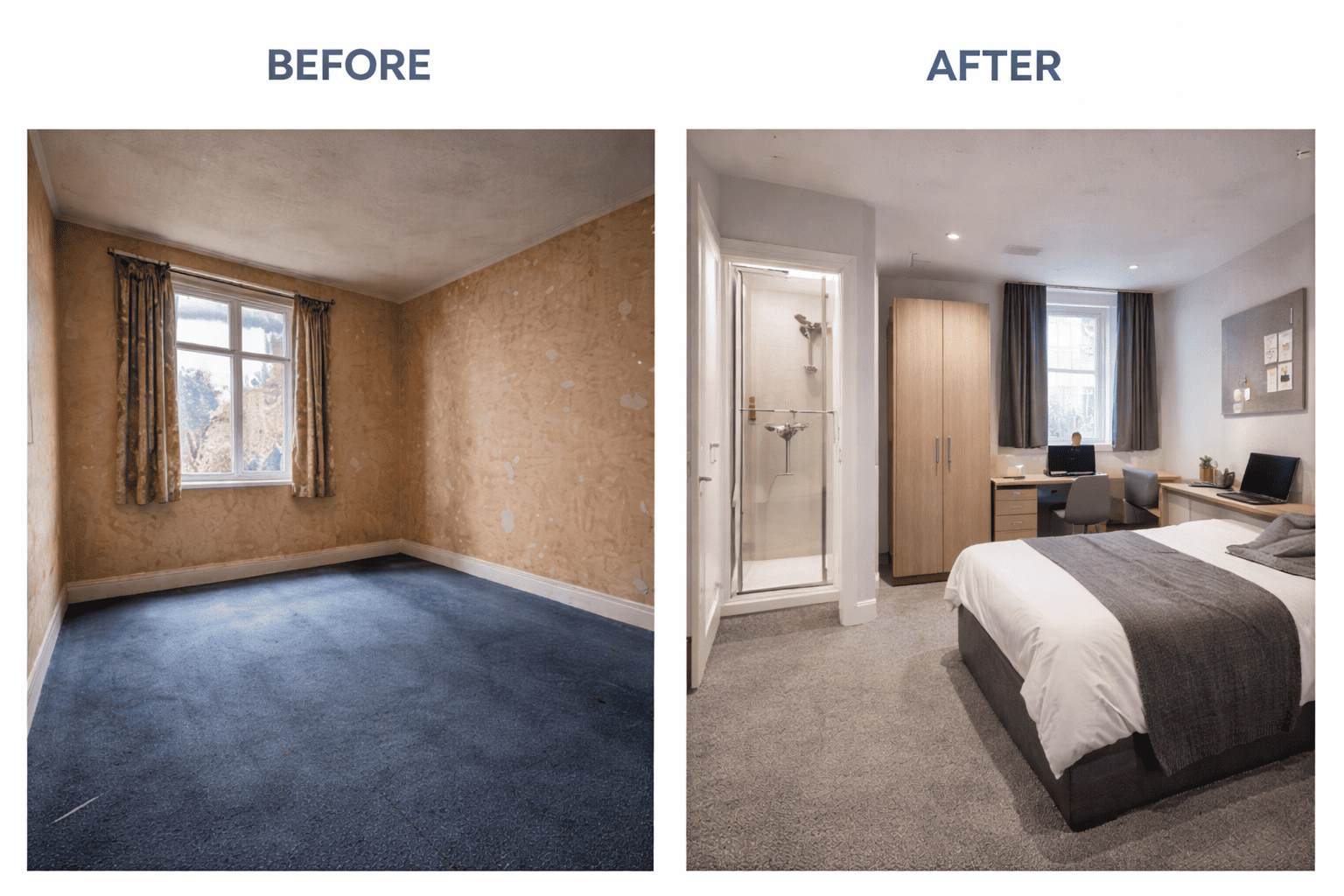
A good general builder can do wonders on a loft extension, a kitchen refit, or a whole-house renovation. But put them in charge of an HMO conversion, and things often go wrong.
Not because they’re bad at their job. It’s because HMO conversions aren’t just building work — they’re compliance work. Fire safety, room sizes, escape routes, acoustic separation, ventilation, licensing standards. Miss any one of these and the property fails its licensing inspection, which means rework, delays, and lost rental income.
We’ve seen this story play out too many times. A landlord hires a builder they trust, the work is completed on time and to a decent standard, and then the council inspector turns up and flags multiple failures. Suddenly the “cheaper” quote becomes the most expensive decision of the project.
1. Fire Doors That Aren’t Actually Fire Doors
This is the single most common failure. HMO bedrooms and communal areas need FD30 fire doors — doors that provide 30 minutes of fire resistance. The door itself is only part of it. The frame, hinges, intumescent seals, door closer, and gaps around the edge all have to meet specific standards.
General builders often fit doors that look right but don’t meet spec. Maybe the intumescent strips are missing. Maybe the gap at the bottom is too wide. Maybe they’ve used standard hinges instead of fire-rated ones. The door is then legally useless as a fire door, even though it cost full price.
2. Escape Routes That Don’t Work
HMOs need protected escape routes — corridors and stairwells that allow tenants to exit safely in a fire. That means fire-resistant partitions, self-closing doors, no obstructions, and no routing through “risk rooms” like kitchens.
A general builder focused on maximising bedroom count might install an open-plan kitchen bleeding into a hallway, or a loft bedroom that only escapes through another bedroom. Both fail inspection. The fix usually means ripping out finished work and reconfiguring the layout.
3. Room Sizes That Miss the Mark
National minimum room sizes for HMOs are set by law, but many London councils apply higher standards. A bedroom needs to be at least 6.51m² for a single occupant and 10.22m² for a couple — but your borough may require more. Floor area under a sloping roof (below 1.5m ceiling height) doesn’t count at all.
A general builder working from a quick sketch might create a bedroom that measures fine on paper but fails once the sloping roof is factored in. Or they’ll partition a room to create an en-suite and leave the bedroom a few centimetres short of the minimum. Tiny errors, major consequences: the room can’t legally be let, and you’ve lost a chunk of your expected rental income.
4. Inadequate Fire Alarm Systems
HMOs need interlinked fire alarm systems — usually Grade D1 or Grade A, depending on the size and layout of the property. That means mains-powered detectors with battery backup, interlinked across every floor so that a fire in one part of the house triggers alarms throughout.
Battery-only smoke detectors, the kind you buy for a standard home, don’t meet the standard. Neither do individual alarms that aren’t interlinked. A general electrician without HMO experience might install what they think is a decent alarm setup, only for the inspector to reject it entirely.
5. Sound Insulation Nobody Considered
Building regulations require a minimum standard of acoustic separation between bedrooms in an HMO. If tenants can hear each other through the walls, it’s not just an annoyance — it can fail building control. Getting this right usually means proper insulation in stud walls, resilient bars, or double plasterboard with acoustic sealant at the edges.
General builders often treat internal walls as a basic partition job. The walls go up quickly, they look fine, and nobody thinks about sound until the first tenant complains — or worse, until the inspector asks for test results you don’t have.
6. Kitchens and Bathrooms That Don’t Scale
An HMO kitchen isn’t a family kitchen. It needs enough hob rings, fridge space, food storage, and worktop area to serve multiple unrelated tenants. Most councils specify minimum requirements — for example, one fridge per three tenants, a minimum number of sockets, and specific worktop lengths.
Bathrooms follow the same logic. The general rule is one bathroom per four to five occupants, but some boroughs want tighter ratios. A general builder who installs a standard family-spec kitchen or a single bathroom for six tenants has just guaranteed a licensing failure.
7. Ventilation, Heating, and Hot Water
Six tenants produce six times the moisture of a single occupant. Without proper mechanical ventilation in bathrooms and kitchens, you get condensation, mould, and eventually health hazards that trigger a Housing Health and Safety Rating System (HHSRS) inspection.
Hot water systems are another common failure point. A standard combi boiler sized for a family of four won’t cope with six people all showering around the same time in the morning. The building looks finished, but the tenants complain within weeks — and once reviews start appearing online, your room rents suffer.
The Cost of Getting It Wrong
When an HMO fails its licensing inspection, the landlord pays twice. First for the original work, then again for the fixes. And while the property sits waiting for rework, you’re losing rental income — typically £5,000–£7,000 per month on a six-bed HMO in London.
If the failure is serious enough, you may also need to revisit the planning position. Some councils won’t issue a licence until planning issues are resolved, and that delay can stretch to six months or more.
A specialist HMO builder costs about the same as a general builder — sometimes slightly more, sometimes less. But the compliance-first approach means the property passes inspection first time, tenants move in on schedule, and the investment starts earning from day one.
How hmoconversionbuilders Works Differently
We focus exclusively on HMO conversions. Every project starts with a compliance review — we check the property against local licensing rules, planning limits, Article 4 restrictions, and building regulations before we design anything. That way, any issues are flagged at the beginning, not discovered halfway through construction.
Our project managers understand exactly what council officers and licensing inspectors look for. Fire doors are specified and installed to the correct standard. Escape routes are planned properly. Room sizes are calculated with sloping roofs and partition walls factored in. Alarm systems are interlinked and documented. Sound insulation, ventilation, and hot water capacity are all sized for HMO use, not family use.
The result is a property that passes inspection without fuss, starts generating rent on schedule, and holds up over years of heavier tenant use.
Get in touch for a free, no-obligation consultation. We’ll tell you honestly whether your property works as an HMO, what it will cost, and what it will take to get it right.