A complete guide to budgeting, compliance, and return on investment for landlords and property investors
Published: March 2026
Turning a regular house into an HMO is still one of the best ways to increase rental income in London. In Zones 2 to 4, you can usually rent out each room for £850 to £1,200 or more per month, so the numbers stack up. However, these higher returns mean you also need to budget for significant upfront costs, particularly in London.
This guide explains what you’ll really spend to convert a property into an HMO in London in 2026, including construction, compliance, licensing, and professional fees.
Typical HMO Conversion Cost Ranges
The cost to convert to an HMO depends on the size and condition of the property, how much work is needed, and the standard of finish you want. In London, expect to pay 20 to 40 percent more than the UK average because of higher labour costs and the extra hassle of getting materials delivered.
Here’s what you should plan to budget for an HMO conversion in London in 2026:
| HMO Type | Estimated Cost Range | Notes |
| Small HMO (3–4 tenants) | £35,000 – £75,000 | Minimal structural work; fire doors, electrics, bathrooms |
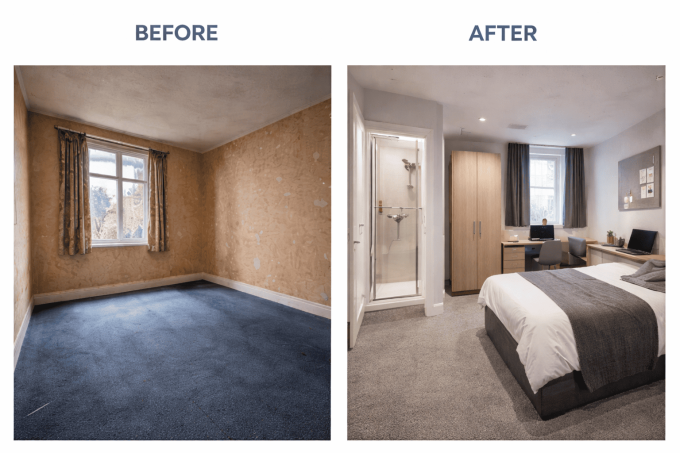
| Medium HMO (5–6 tenants) | £70,000 – £140,000 | Layout reconfiguration, en-suites, possible loft/extension |
| Large HMO (7+ tenants) | £120,000 – £250,000+ | Major structural changes, loft conversions, full Sui Generis planning |
| Per-room benchmark | £12,000 – £18,000 | London premium on the UK average of £10k–£15k per room |
Where Does the Money Go?
Knowing where your money goes helps you budget properly and avoid unexpected costs during the project.
Construction and Building Works
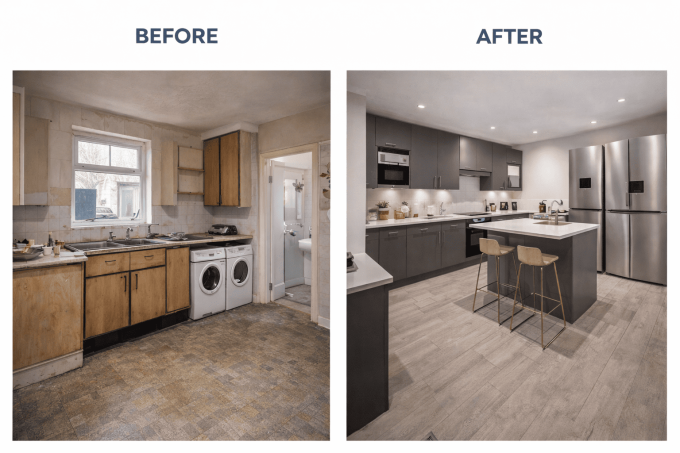
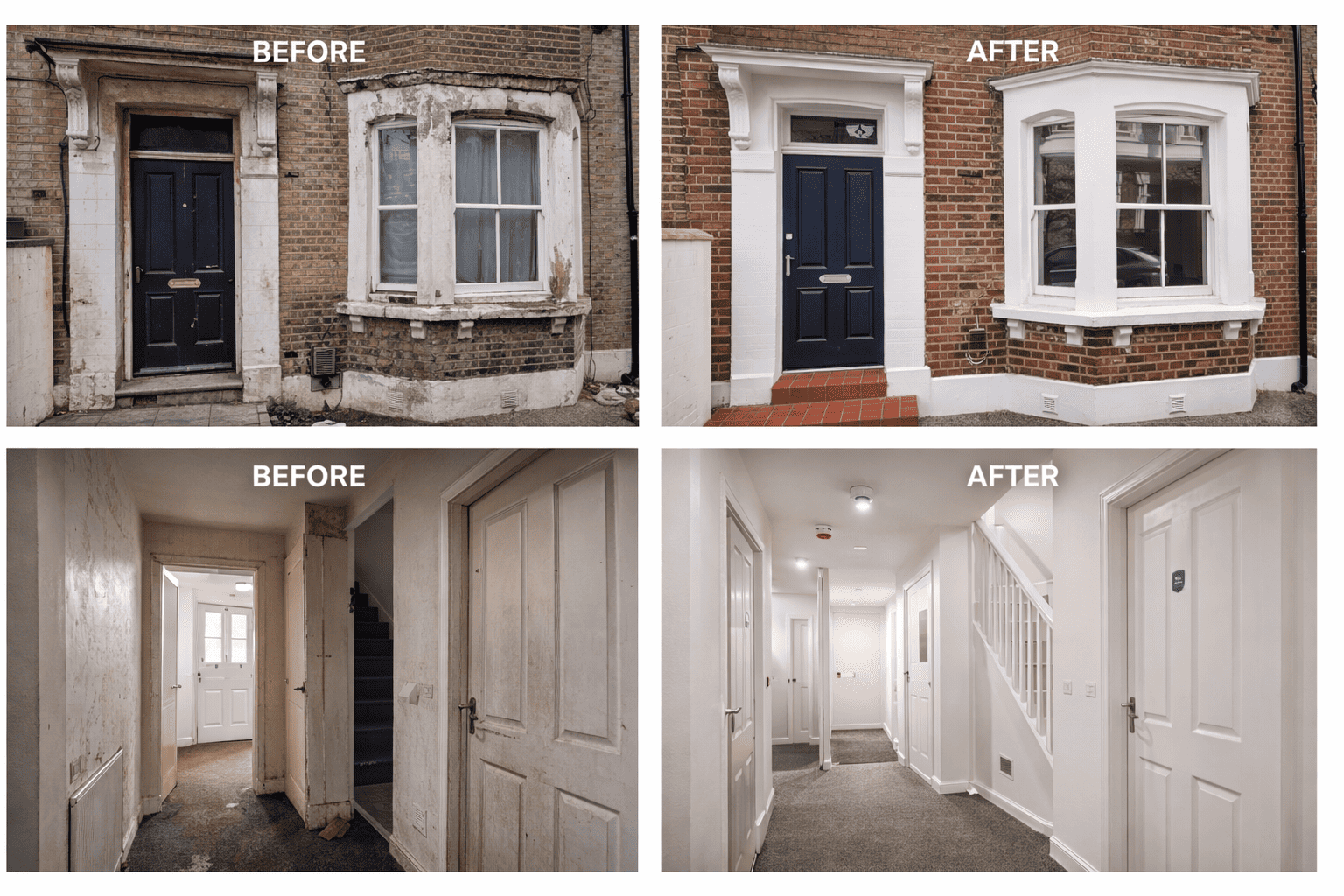
Construction is usually the biggest part of your budget. In London, expect to spend £50,000 to £100,000 or more, depending on how much work is needed. This includes new kitchens and bathrooms, moving walls, rewiring, plumbing, plastering, flooring, and decorating. If you want to add a loft conversion or a rear extension for extra bedrooms, add another £40,000 to £65,000.
Fire Safety and Conformance
Fire safety is a major and unavoidable cost. HMOs have to meet strict standards under Part B of the Building Regulations. Set aside £10,000 to £20,000 for fire doors, linked smoke and heat alarms, emergency lighting, fire-resistant materials, and safe escape routes. If you cut corners here, you risk losing your licence and facing legal trouble.
Professional Fees
You’ll need expert advice to make sure your conversion is both legal and profitable. Plan to spend £5,000 to £12,000 on things like architectural drawings, layout changes, HMO design advice, structural engineer reports, building regulation approval, and planning applications if needed.
Furnishing and Communal Areas
Most HMOs iMost London HMOs come fully furnished. Fitting out bedrooms and shared spaces to a good standard usually costs £15,000 to £25,000, depending on how many rooms you have and the finish you want. Spending more on higher-quality furniture for young professionals can help you charge higher rents, so it’s often worth the investment. and Planning Permission
HMO Licensing
Any HMO with five or more tenants forming two or more households requires a mandatory HMO licence. Many London boroughs also operate additional licensing schemes that cover smaller HMOs. Licence fees across London typically range from £500 to £1,500 depending on the borough, property size, and number of occupants. Licences usually last five years, and you’ll need updated safety certificates at renewal.
Article 4 Directions and Planning Permission
This is a key point for anyone investing in London. Many boroughs have brought in Article 4 Directions, which means you can’t automatically convert a family home (C3) into a small HMO (C4) without getting planning permission first.
Boroughs with borough-wide Article 4 coverage include Newham, Tower Hamlets, Barking & Dagenham, and Waltham Forest. Others, such as Haringey, Lewisham, and Southwark, apply restrictions selectively to certain wards. Some central boroughs, such as Camden, Westminster, and Hackney, currently allow small HMO conversions without full planning consent, though licensing requirements still apply.
Where planning permission is needed, a full application for change of use from C3 to C4 will add both cost and time. Budget £2,000 to £5,000 for the planning application, supporting documents, plus any required assessments. For large HMOs of seven or more occupants (Sui Generis class), full planning permission is always mandatory regardless of Article 4 status.
Important: Always Check Before You Buy
Always check the Article 4 status of a property before purchase. Operating an unlicensed HMO can result in civil penalties of up to £30,000 per offence, criminal prosecution, and rent repayment orders covering up to 12 months of rent.
Hidden Costs to Factor In
Apart from the main construction costs, there are other expenses that often surprise first-time HMO investors:
- Stamp duty and legal fees on acquisition: £7,000–£15,000+ depending on purchase price
- Building control and regulation approval fees
- Energy Performance Certificate (EPC) upgrades: the legal minimum is Band E, but many investors aim for Band C to future-proof their property
- Void periods during conversion (typically 2–6 months of lost rental income)
- Contingency budget: always add 10 to 15 percent to your estimated costs to cover unexpected problems
- Ongoing HMO management and compliance costs post-completion
Key Regulatory Changes for 2026
The rules for HMO landlords are changing fast. The Renters’ Rights Act 2025 has scrapped Section 21 ‘no-fault’ evictions, so landlords now have to use Section 8 grounds to regain possession of their property. This means you need to keep good records and manage tenancies professionally. Over 100 local authorities now have specific HMO-related restrictions in place as of early 2026. New directions have recently been confirmed in boroughs including Ealing and Hillingdon, and this trend shows no sign of slowing.
Fire safety and building rules are getting stricter too. It’s better to invest in full compliance from the start than to fix problems later at a higher cost.
What Returns Can You Expect?
Even though you need to invest more upfront, London HMOs can still give you strong returns. A well-designed six-bedroom HMO in outer London can bring in £5,100 to £7,200 a month, based on current room rents of £850 to £1,200 each.
Gross yields for London HMOs are usually around 6 to 8 percent. That’s lower than in northern cities, where you might get 10 to 12 percent or more, but it’s still much better than the 3 to 5 percent you get from a standard London buy-to-let. London’s high property prices mean yields are lower as a percentage, but the actual rental income is still among the highest in the UK.
| Example: 6-Bed HMO, Outer London | Estimated Figures |
| Purchase price | £450,000 – £525,000 |
| Conversion costs | £80,000 – £150,000 |
| Total investment | £530,000 – £675,000 |
| Monthly rental income (6 rooms) | £5,100 – £7,200 |
| Annual gross income | £61,200 – £86,400 |
| Estimated gross yield | 6.5% – 8.0%+ |
Tips for Keeping Costs Under Control
- Choose boroughs without Article 4 restrictions where possible to avoid planning application costs and delays.
- Work with HMO-specialist contractors who understand compliance requirements from the outset, avoiding expensive rework.
- Look for properties that only need minor structural changes. For example, a Victorian terrace with a good layout and an existing loft is much cheaper to convert than a house that needs big extensions.
- Plan fire safety into your design from the start. Retrofitting later usually costs a lot more.
- Use bridging finance strategically, specialist HMO bridge loans can offer up to 75% of the purchase price plus 100% of conversion costs, keeping your equity requirement manageable.
The Bottom Line
Converting a property to an HMO in London in 2026 is a big investment. Most projects cost between £70,000 and £200,000 or more just for the conversion, before you even buy the property. But if you do your research on planning, compliance, and local demand, the returns are still some of the best in UK residential property.
To succeed, do your due diligence before you buy, budget realistically with a contingency, and work with professionals who know HMO conversions. London’s rental market is still strong, and well-designed, compliant HMOs in good locations continue to attract tenants and generate steady income.
Disclaimer: This article is for general informational purposes only and does not constitute financial, legal, or investment advice. Costs, regulations, and market conditions vary by location and can change. Always carry out your own due diligence and consult qualified professionals before making investment decisions.