
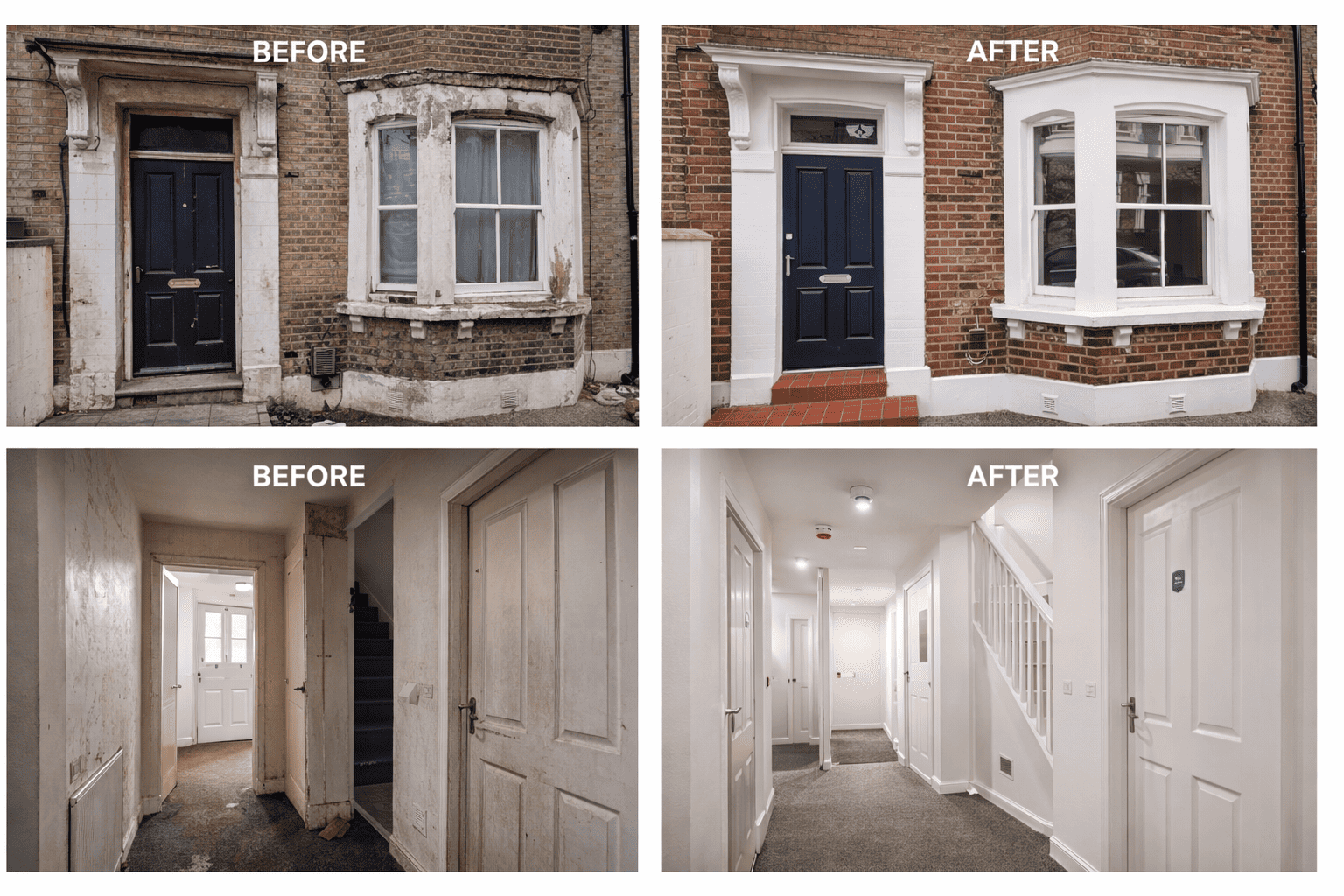
If you’re considering an HMO conversion in London, one of the first things to understand is this:
Not all boroughs treat HMOs the same.
Some are relatively straightforward to work with. Others are far more restrictive — whether through Article 4 directions, planning scrutiny, or licensing standards.
We’ve worked across multiple boroughs, and the difference in approach can be significant. What works in one area may not get off the ground in another.
This guide breaks down which London boroughs are generally tougher on HMOs — and why.
What Makes a Borough “Tough” on HMOs?
Before naming specific areas, it’s worth understanding what “tough” actually means in practice.
Typically, stricter boroughs will have:
- Article 4 Direction in place (removing permitted development rights)
- Higher refusal rates on planning applications
- More scrutiny on layout, room sizes, and amenity space
- Additional licensing schemes beyond mandatory HMO licensing
- Stronger concerns around overconcentration of HMOs
In short, these councils are actively managing — or limiting — the growth of HMOs.
Boroughs Known for Stricter HMO Control
Harrow
Harrow is a good example of a borough where you need to get things right from the outset.
- Article 4 applies across much of the borough
- Planning permission is typically required for C3 to C4 conversions
- Strong focus on room sizes and communal space
- Licensing expectations are clear but strictly enforced
Harrow is not impossible — but it rewards well-thought-out layouts and realistic proposals.
Brent
Brent has become increasingly cautious around HMOs.
- Article 4 restrictions apply in many areas
- Planning officers pay close attention to overconcentration
- Waste management and external appearance are often scrutinised
- Applications can be refused if HMOs are already prevalent on the street
In Brent, it’s not just about the property — it’s about what’s already nearby.
Ealing
Ealing is one of the more structured boroughs when it comes to HMOs.
- Borough-wide Article 4 Direction
- Clear planning expectations, but little flexibility
- Strong requirements around internal space standards
- Licensing conditions are detailed and consistently applied
Ealing can work well — but only if the design aligns closely with policy.
Barnet
Barnet takes a measured but firm approach.
- Article 4 in place across key areas
- Planning decisions often hinge on neighbour impact
- Amenity space and layout are closely reviewed
- Larger HMOs face additional scrutiny
It’s a borough where borderline schemes often struggle.
Hillingdon
Hillingdon is slightly different — not always the strictest on paper, but practical challenges can arise.
- Article 4 applies in parts of the borough
- Focus on parking, access, and refuse storage
- Licensing standards must be met precisely
- Layout efficiency becomes critical in smaller properties
We often see projects here fail due to poor planning of space, rather than outright policy barriers.
Boroughs That Are Generally More Flexible
While still regulated, some boroughs tend to be more workable (depending on the area and scheme):
- Parts of Croydon
- Some areas in Enfield
- Select zones in Redbridge
That said, even in “easier” boroughs, compliance still matters — especially for licensing and fire safety.
The Biggest Mistake Landlords Make
The most common issue we see is this:
Assuming an HMO conversion is just a standard refurbishment.
In stricter boroughs, that approach leads to:
- Planning refusals
- Failed inspections
- Costly redesigns mid-project
The reality is that successful HMO projects start with:
- A realistic understanding of local policy
- A layout designed around compliance
- A build strategy that anticipates inspection
How to Approach an HMO in a Strict Borough
If you’re targeting areas like Harrow, Brent, or Ealing, the key is to be proactive, not reactive.
That means:
- Checking Article 4 status early
- Designing around minimum room sizes from day one
- Planning fire safety routes before construction starts
- Avoiding over-optimised layouts that push compliance limits
In these boroughs, a slightly more conservative design often performs better long term.
Final Thoughts
London remains one of the strongest HMO markets in the UK — but it’s also one of the most regulated.
The borough you choose will directly impact:
- Whether your project gets approved
- How smooth the build process is
- Whether your property passes inspection first time
The goal isn’t to avoid stricter boroughs — it’s to understand how to work within them properly.
Thinking About an HMO Conversion in London?
If you’re unsure how a specific borough will treat your project, it’s worth getting a clear view early — before committing to design or build.
A compliant HMO isn’t just about meeting regulations — it’s about building something that works in the real world, for both councils and tenants.